


Food and beverage
Hours spent retyping sales are hours not spent opening branches.
- Branch closes, without the chasing.
- Purchase orders, drafted.
- Payouts matched as they land.

 Frankenstein, makers of {{ productName }}.
An AI-native ERP, built into the way your business already runs.
2026 · frankenstein.ph/ensemble
Frankenstein
{{ productName }}, an AI-native ERP
Sheet 01 / 12
2026
Mid-size companies run on banks, POS systems, marketplaces and spreadsheets that rarely share data. The work between them falls to people, and every new branch, project or store adds to it.
01Banks
About four in five business payments are made on paper, and bank activity reaches finance as a statement to download, not a live feed. Finance matches every deposit and payout to the books by hand.
18.75%
of Philippine business payments were digital in 2025, against 74.91% of the payments people make
BSP, 2025 E-payments Measurement, by number of payments
02Finance
Staff type the day's sales again into the branch report, finance's sheet and the books, then check each copy against the others to close the month.
86%
of organizations still reconcile in spreadsheets, even with software for closing the books
SSON survey for Redwood Software, 2026: 88 leaders
03People
How a supplier gets paid, which figure to trust, what to do when a payout lands short: it lives in a few heads and group chats, and it leaves when they do.
1 in 5
staff left Philippine businesses in 2024 (19.1%); the 2025 projection, 20.0%, is Southeast Asia’s highest
Aon, Southeast Asia turnover study, Oct 2025
04Systems
Many of the systems a business depends on, from bank portals to government filings, offer no direct connection, only files and forms. An ERP that assumes they connect leaves the gaps to people.
27%
of the 957 apps in the average large enterprise are integrated with each other
MuleSoft, 2026: 1,050 IT leaders, firms of 1,000+
Frankenstein
{{ productName }}, an AI-native ERP
Sheet 02 / 12
2026
Where the usual fix is an integration that doesn't exist or another hire, {{ productName }} reads, matches and remembers instead.
What comes in
{{ productName }}
What changes
01Banks
The bank statement file the team already downloads
02Finance
POS sales, deposits, card settlements and platform payouts, as each report comes in
03People
Chats, photos and files
04Systems
An export, an emailed report or a file in a shared folder
every statement, report and file, in the form it arrives
each line to the sale, payout or bill behind it, daily and net of fees
all of it as one record that answers with its source and its date
01Banks
Nobody checks a statement line by line.
02Finance
Finance reviews only the lines that don't match.
03People
A new hire asks {{ productName }}, not the person who left.
04Systems
{{ productName }} reads what each system already exports, so no one has to build an integration first.
Frankenstein
{{ productName }}, an AI-native ERP
Sheet 03 / 12
2026
{{ productName }} is an AI-native ERP. Think of it as an operating system for your business: one brain behind the tools you already run, holding what the team knows and acting on it.
Most ERPs promise to run everything, then do too little of it well enough for how businesses in Southeast Asia actually work. Every {{ productName }} deployment is fitted to your processes and SOPs.
It connects systems that were never designed to talk to each other, from your POS and accounting to payroll and group chats. Its AI handles the routine work across all of it.
One record of the whole business. When your team shares a supplier bill, a photo from the floor or a message thread, {{ productName }} files it where it belongs.
Frankenstein
{{ productName }}, an AI-native ERP
Sheet 04 / 12
2026
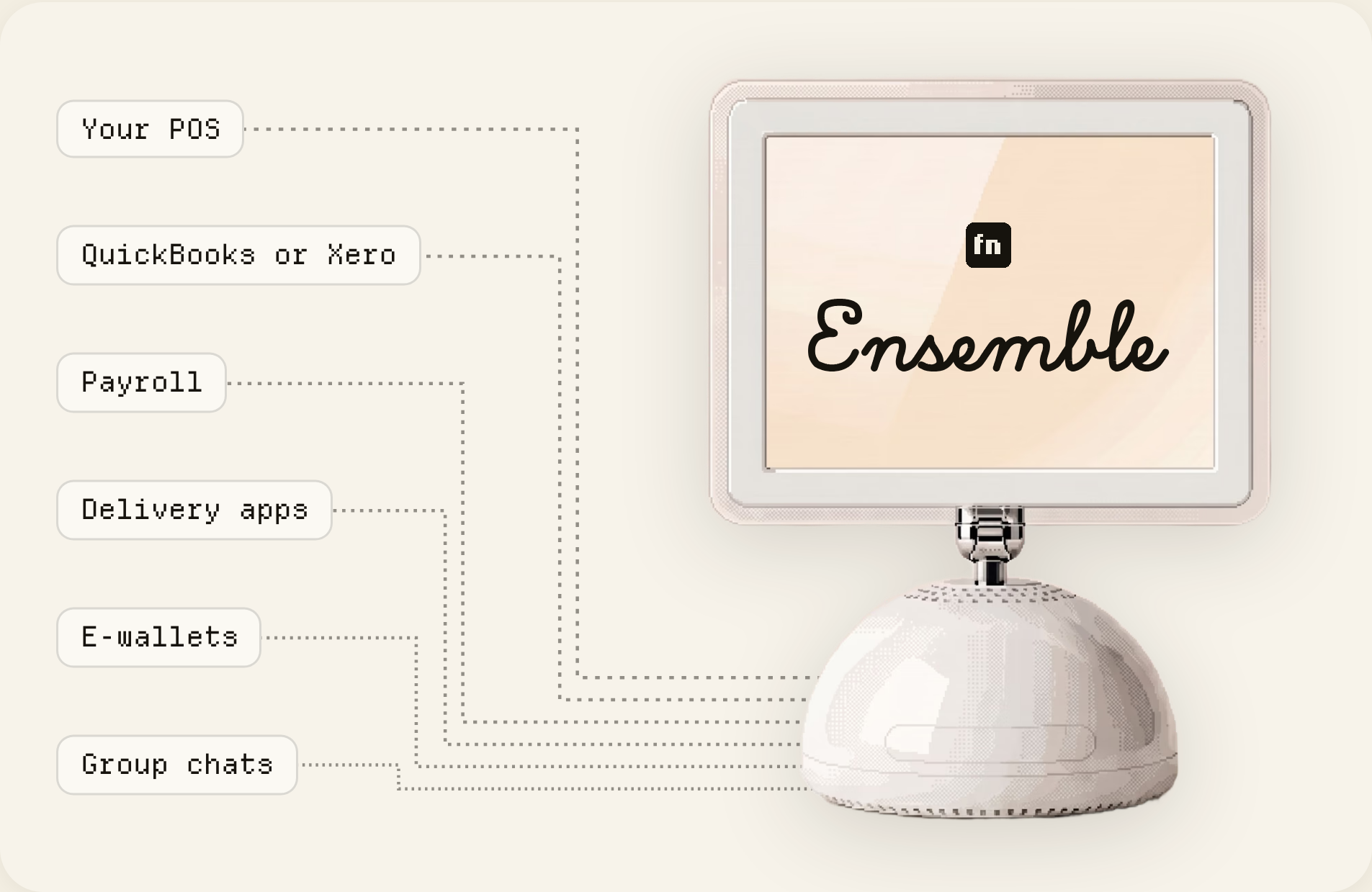
Everything you keep, connected.
Your BIR-accredited POS keeps issuing receipts, and QuickBooks, Xero or your bookkeeper keeps the ledger. Payroll, the delivery apps and your group chats stay too. {{ productName }} connects to all of them, so the day's sales are entered once and everything after reads from there.
A memory that never stops taking notes.
{{ productName }} takes in every message, photo and file as it arrives and keeps all of it as one living record. Ask anything; the answer arrives with its source and its date.
Sales by branch and channelPayouts and depositsStock, wherever it sitsOrders and supplier billsPeople, hours and approvalsEvery change, on the record
The {{ productName }} appThe companion chat, inside the appThe Telegram companion, in your team chat Frankenstein
{{ productName }}, an AI-native ERP
Sheet 05 / 12
2026
{{ productName }} runs the routine work in the background. Your team switches each automation on and sets its rules, and anything outside them comes to a person.
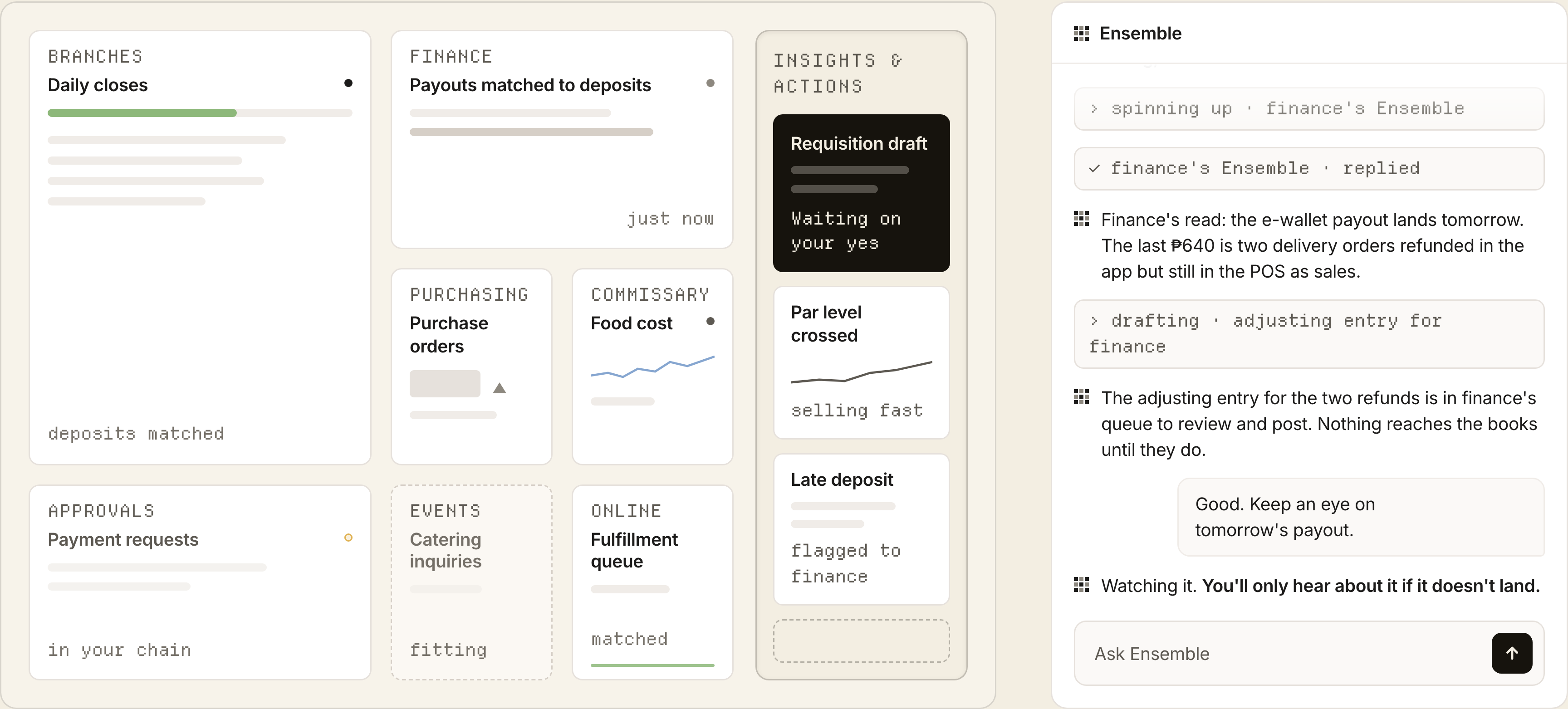
How the board reads
Each department's routine on the left. What needs a yes waits in the middle. The companion chat sits on the right.
A food group · sample data
Frankenstein
{{ productName }}, an AI-native ERP
Sheet 06 / 12
2026

Everyone in AI calls everything an agent. We saved the word for one thing: a whole flow nobody wants back, handed off for good and run from start to finish.
Answering customer inquiries is one such flow, and drafting a reorder when stock runs low is another. A flow handed off for good has to be safe to leave running, so every agent works inside these safeguards.
{{ productName }} never issues receipts, moves money or runs payroll.
Frankenstein
{{ productName }}, an AI-native ERP
Sheet 07 / 12
2026
Your business
Good to have you back. {{ productName }} has been keeping the records.
Sales to match to the bankEvery branch, from the POS and the settlement reports
6 waiting 1 stale 0 unrouted
Branch 3's weekend card sales are not matched yet. The settlement report for those two days has not arrived.
Cafe and bakery
Where it is
Sales readAll seven days, from the POS
Matched to the bankWeekend settlement report not in
Payouts and refunds settled
Ready for the monthly close
Reading
Monday's pastries are left over at close and Saturday's sell out by noon. Next week's plan makes fewer for Monday and more for Saturday.
Every area, one screen · {{ productName }} as a food group's leadership would see it · sample data shown
Frankenstein
{{ productName }}, an AI-native ERP
Sheet 08 / 12
2026
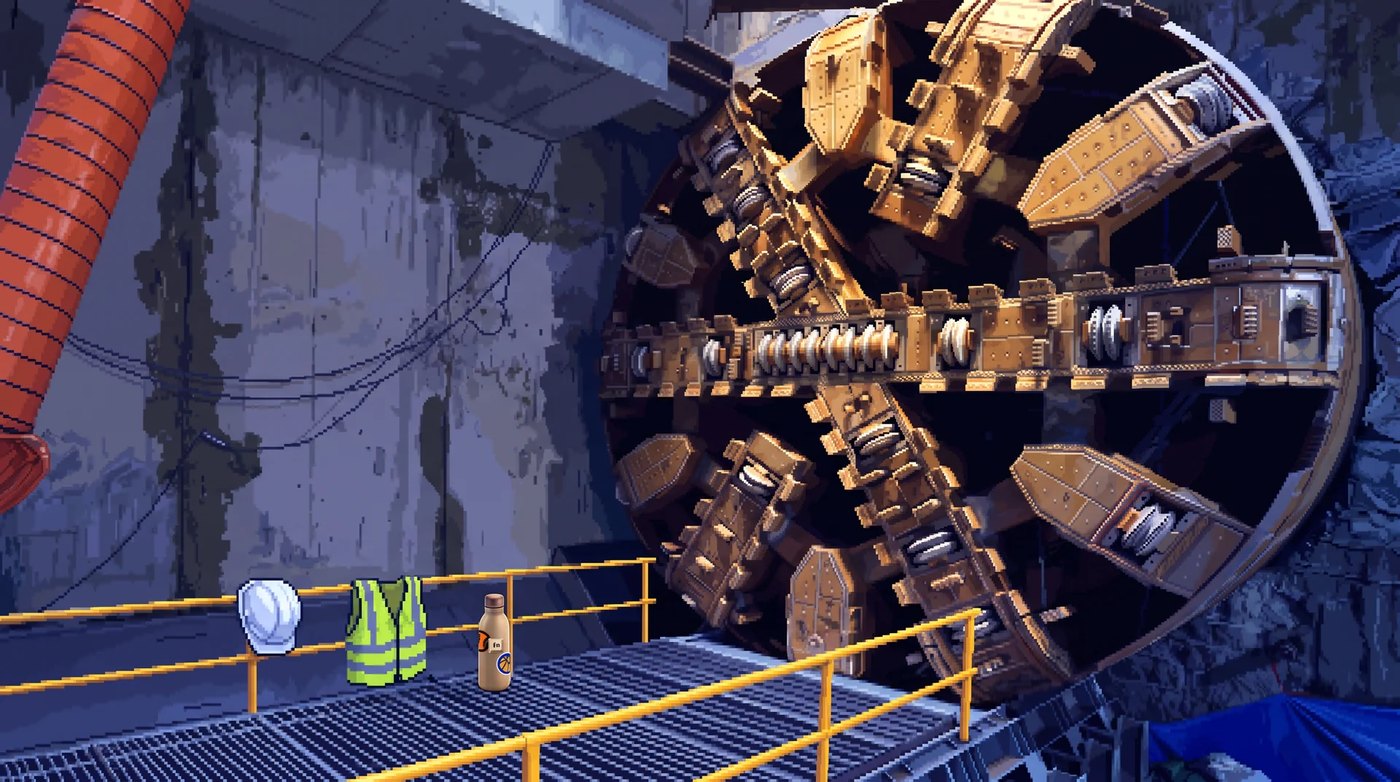
Every deployment starts from the same base and is fitted to the business's own processes and SOPs. Our first deployments are in food and beverage and in construction.
Food and beverage
Hours spent retyping sales are hours not spent opening branches.
Construction and EPC
Hours spent retyping figures are hours not spent winning bids.

Retail and grocery chains
Hours spent on reconciliation are hours not spent growing your business.
Frankenstein
{{ productName }}, an AI-native ERP
Sheet 09 / 12
2026

{{ productName }} turns yours into AI-assisted, automated routines that run every day, from each branch's end-of-day close to matching payouts with deposits. Your team sets the rules and updates them as the work changes, and anything outside them comes to a person.
Frankenstein
{{ productName }}, an AI-native ERP
Sheet 10 / 12
2026
We spent years building systems, teaching, and growing companies. What stuck is what we build with now.

Ed Systems Architectlinkedin.com/in/edmond-yap
Stanford computer science, then years building automated trading systems, the kind that run non-stop and can't afford to fail. With Benj, he co-founded an education-technology company and built the system that runs it. Ed designs {{ productName }}'s architecture.

Benj AI & Machine Learninglinkedin.com/in/benjamin-ang-95b513289
An adjunct professor at Ateneo and a machine-learning engineer. At the education-technology company he founded with Ed, he built real, working AI, including an automated grader for the bar exam. Benj leads the models that let {{ productName }} understand a business.

Luis Product & Strategylinkedin.com/in/luismauro
Founding team of Airbnb Experiences, then years building product, operations, and teams across Silicon Valley startups. He mentors students with Startup Village and ASES Manila, and has advised companies from Y Combinator and Founder Institute. Luis makes sure what gets built fits how a business actually works.




 Startup Village
Frankenstein
{{ productName }}, an AI-native ERP
Sheet 11 / 12
2026
Good systems are assembled, not bought.
We assemble yours.
Two or three sentences is plenty. We read every line ourselves, and a person replies.
A working hour, not a sales call. Bring one branch's daily report or one invitation to bid, and leave knowing what's worth building first.
We prove it on one workflow first. If it doesn't hold up on your floor, you walk away with the process maps we drew.
Frankenstein
frankenstein.ph
{{ contactEmail }}

Scan to open the deck onlinedeck.frankenstein.ph


© 2026 NVIDIA, the NVIDIA logo, and NVIDIA Inception are trademarks and/or registered trademarks of NVIDIA Corporation in the U.S. and other countries.
Frankenstein
{{ productName }}, an AI-native ERP
Sheet 12 / 12
2026